


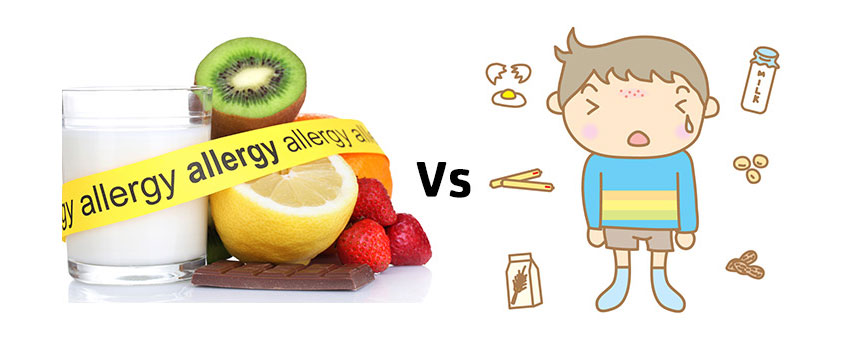


- A food allergy happens when the body reacts against harmless proteins found in foods.
- The reaction usually happens shortly after a food is eaten.
- Food allergy reactions can vary from mild to severe.
Because there are many things that can be confused with food allergies, it is important for parents to know the difference
Symptoms of A Food Allergy
- Skin problems
- Hives (red spots that look like mosquito bites)
- Itchy skin rashes (eczema, also called atopic dermatitis)
- Swelling
- Breathing problems
- Sneezing
- Wheezing
- Throat tightness
- Stomach symptoms
- Nausea
- Vomiting
- Diarrhea
- Circulation symptoms
- Pale skin
- Light-headedness
- Loss of consciousness


If several areas of the body are affected, the reaction may be severe or even life-threatening. This type of allergic reaction is called anaphylaxis and requires immediate medical attention.
Not A Food Allergy
Food can cause many illnesses that are sometimes confused with food allergies. The following are not food allergies:
- Food poisoning— Can cause diarrhea or vomiting, but is usually caused by bacteria in spoiled food or undercooked food.
- Drug effects— Certain ingredients, such as caffeine in soda or candy, can make your child shaky or restless.
- Skin irritation— Can often be caused by acids found in such foods as orange juice or tomato products.
- Diarrhea— Can occur in small children from too much sugar, such as from fruit juices.
Foods That Can Cause Food Allergies
Any food could cause a food allergy, but most food allergies are caused by the following:
- Skin problems
- Hives (red spots that look like mosquito bites)
- Itchy skin rashes (eczema, also called atopic dermatitis)
- Swelling
- Breathing problems
- Sneezing
- Wheezing
- Throat tightness
- Stomach symptoms
- Nausea
- Vomiting
- Diarrhea
- Circulation symptoms
- Pale skin
- Light-headedness
- Loss of consciousness


The good news is that food allergies are often outgrown during early childhood.
It is estimated that 80% to 90% of egg, milk, wheat, and soy allergies go away by age 5 years.
Your pediatrician or allergist can perform tests to track your child’s food allergies and watch to see if they are going away.